
telos: haven · In development
See the risk of mooring snapback in real-time.
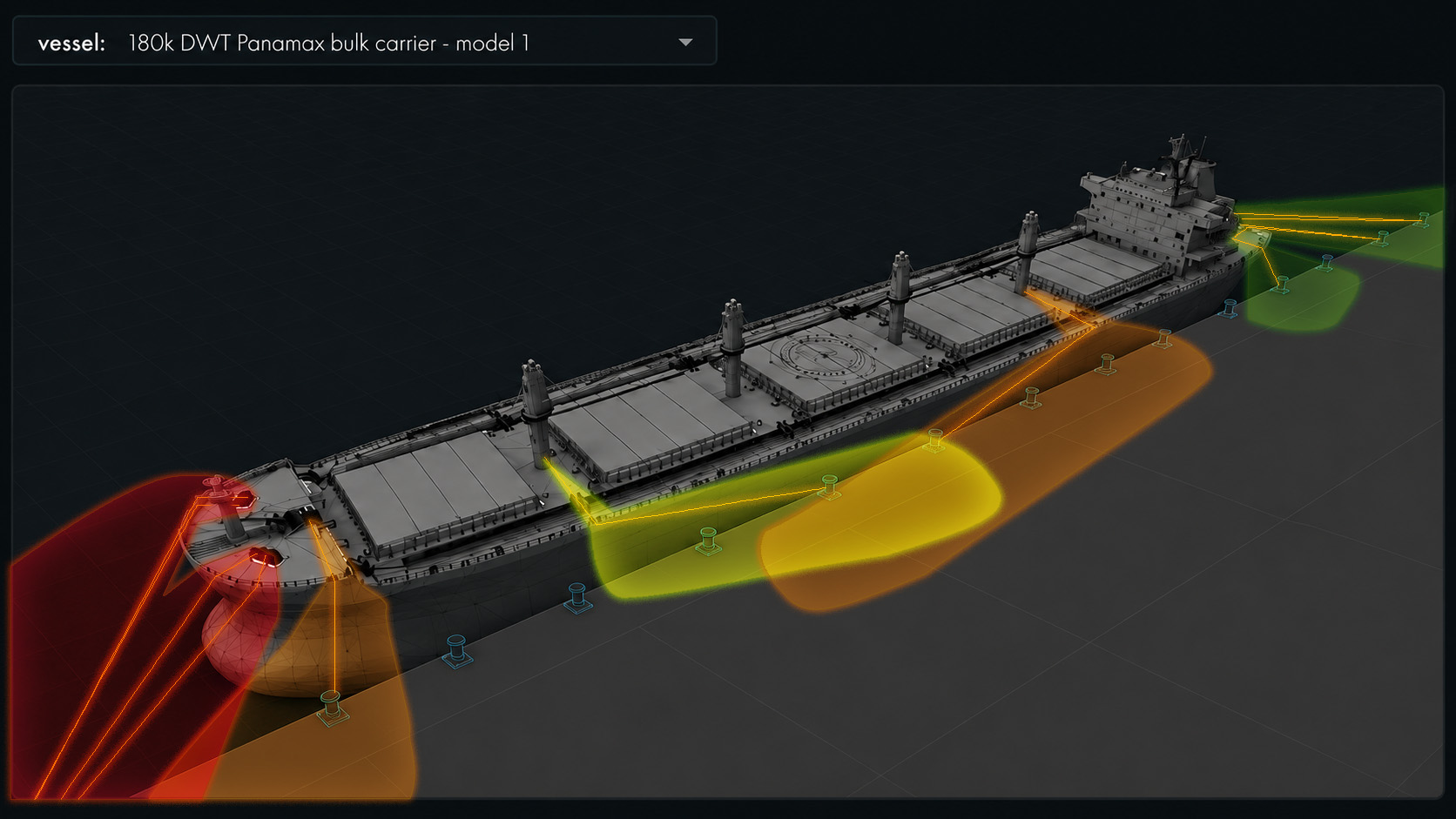
telos: haven uses line geometry and tension data to provide real-time 3D models of exclusion zones, drawn from trillions of datapoints from real engineering analysis.
01 The problem
Mooring lines under tension store incredible energy. When they part, the recoil can approach the speed of sound and is often fatal. Vessels move with loading and tides, and every vessel is different, so how do we predict in real-time where parted mooring lines will go so that we can keep people safe?
02 Core workflow
How it runs.
Read in the vessel model and bollard locations.
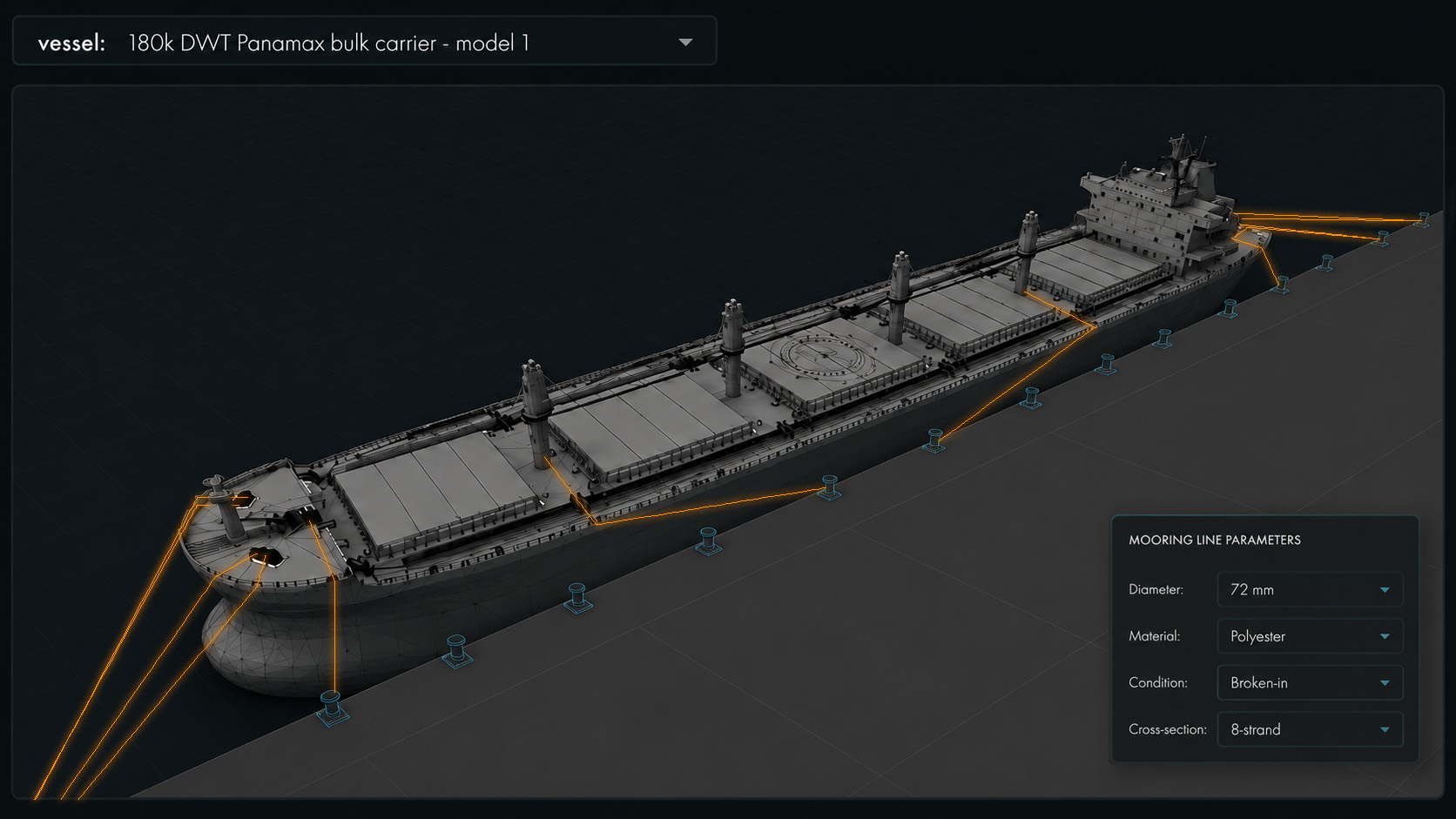
Load the mooring arrangement and nominate the line material and diameter.
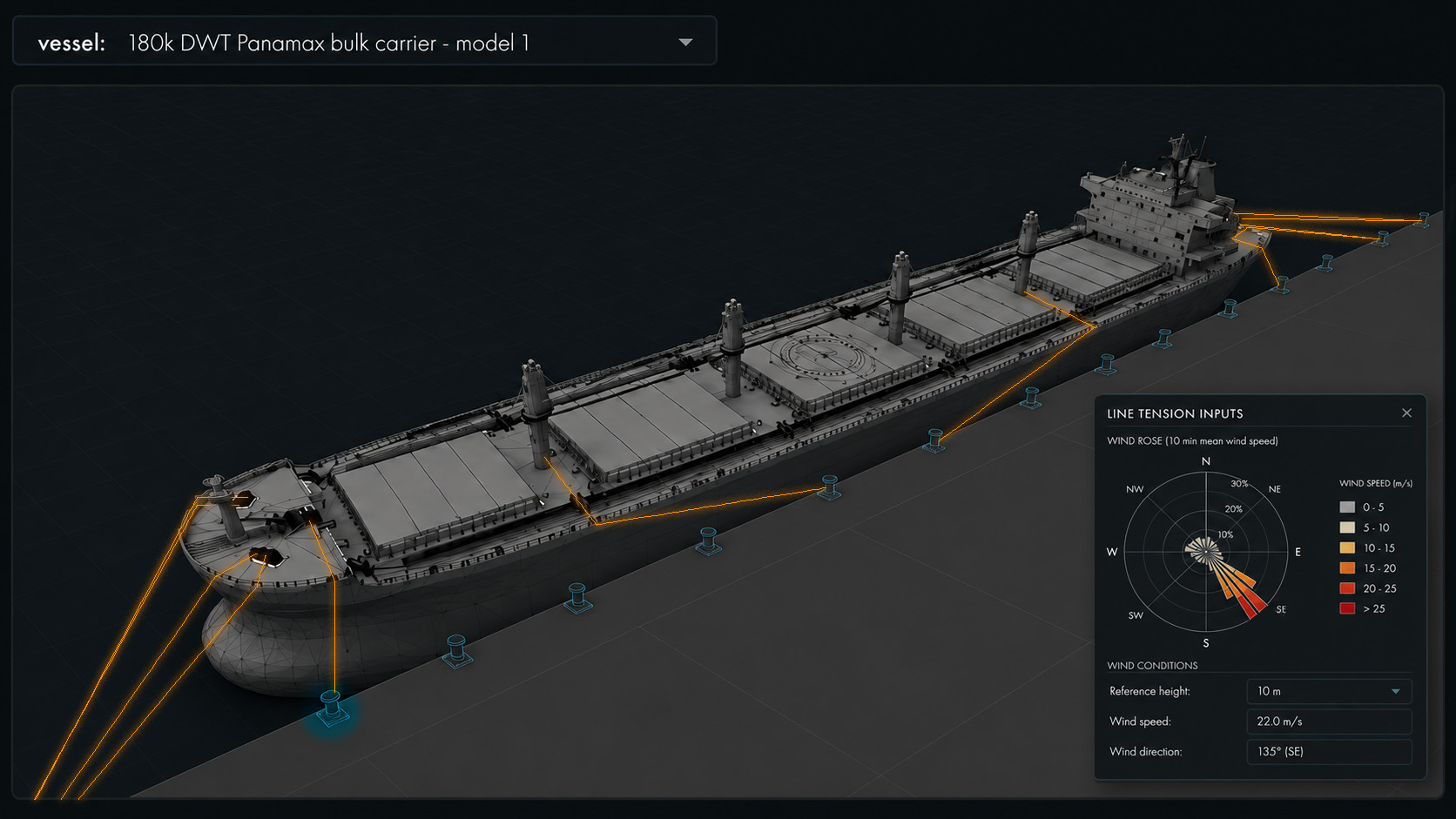
Choose between static and dynamic modes and select the input data for line tensions.
Generate real-time dynamic snapback zones based on the actual mooring arrangement and tensions in the model.
03 Key outputs
What you take away.
Immediate Outputs
Snapback exclusion zones update in real time as line tensions and mooring conditions change.
Any Configuration
Model any facility, vessel, line type, and mooring arrangement within a single adaptable 3D environment.
Visualised Risk
Live snapback paths show personnel where they are exposed, allowing operational controls to be applied before conditions become critical.
04 Software preview
telos: haven
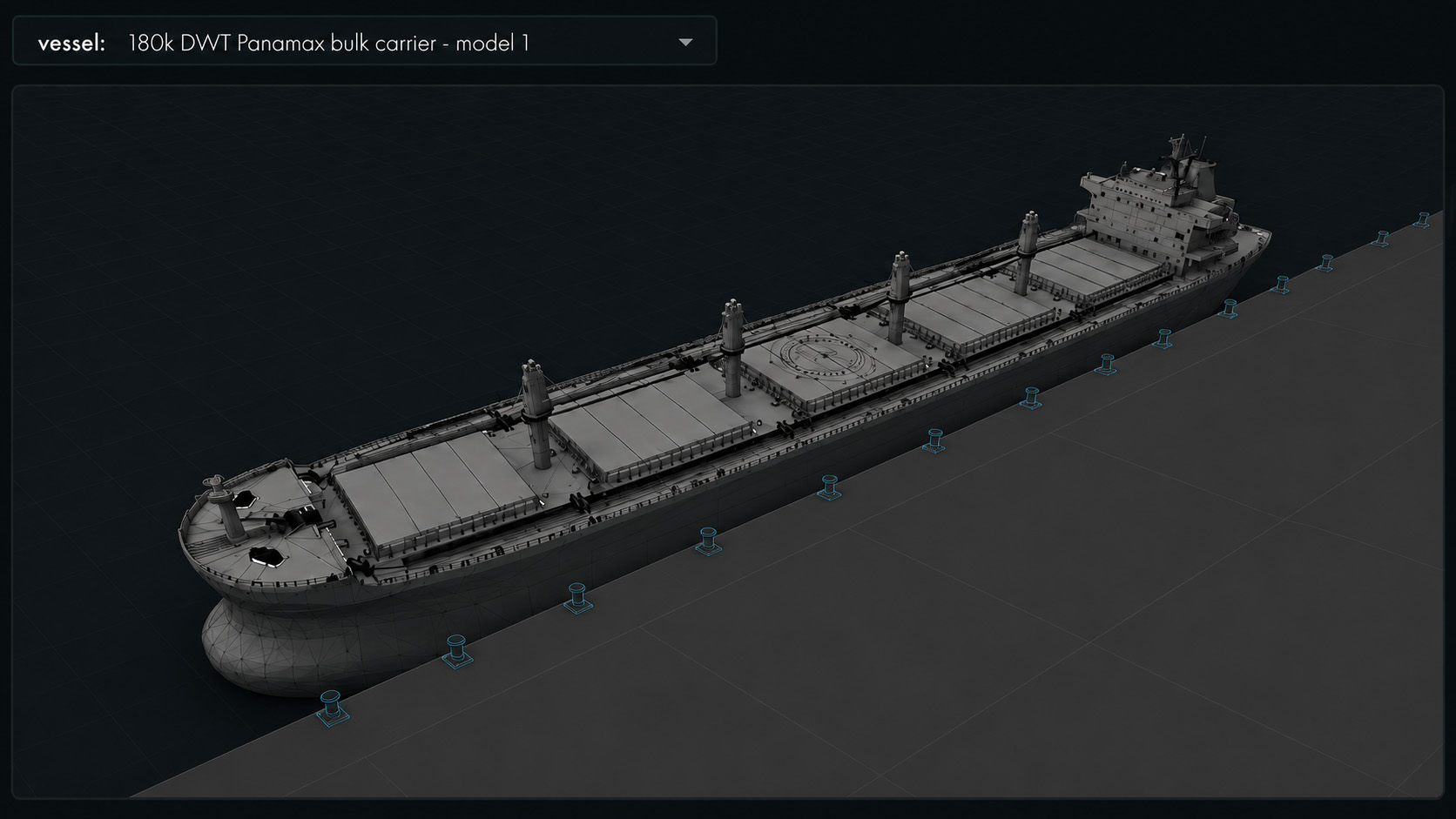

Import vessel and berth geometry.
Start from real geometry. Import the vessel and berth. Place bollards, fenders, fairleads and winches to model precise mooring arrangements.
05 Technical basis
Precalculated explicit finite element analysis models are solved over billions of geometries and materials to provide an envelope library that loads immediately - no calculations required.